
Biophilia in the Office: More Than Just Some Plants
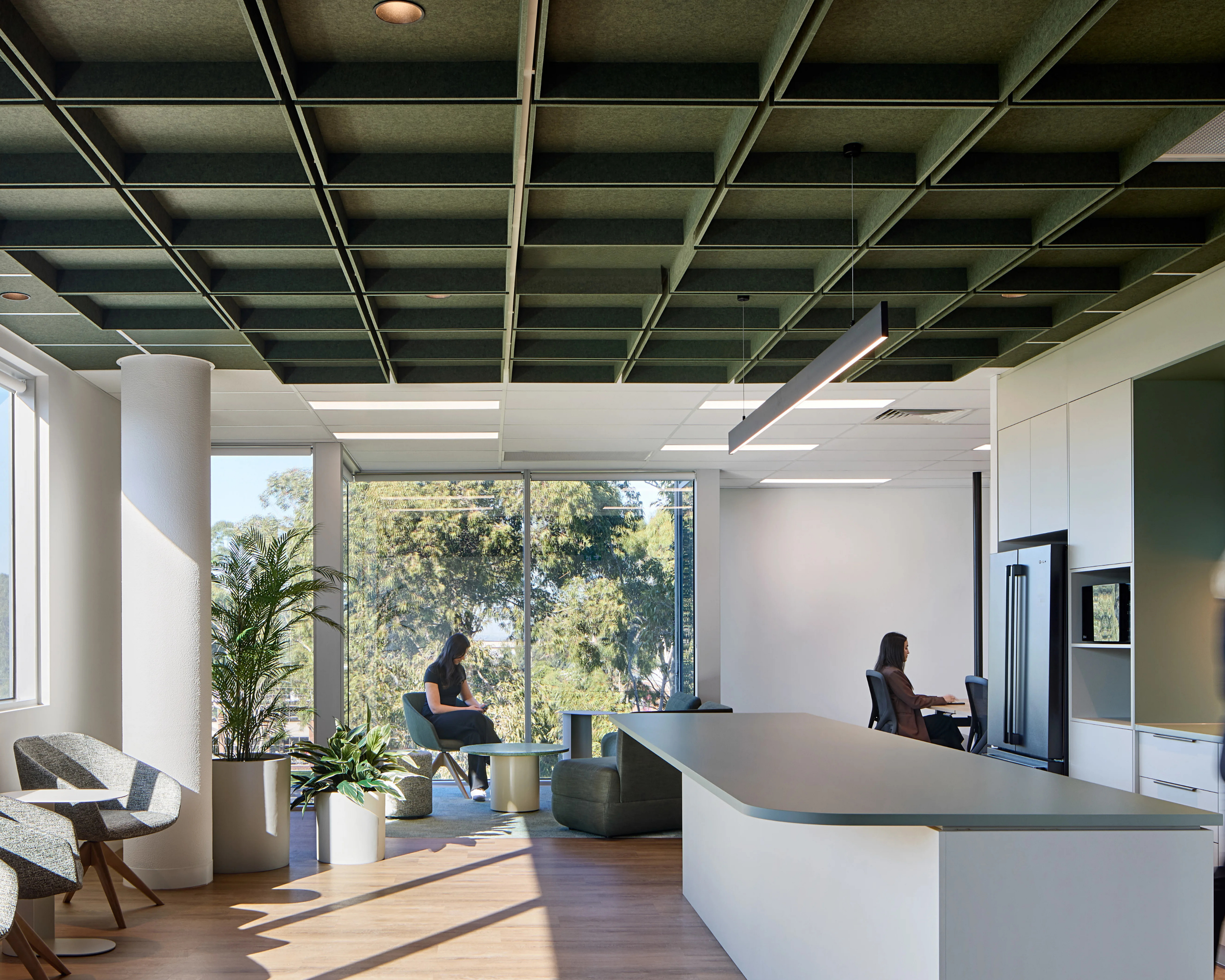
A refreshing office collaborative space that is themed with green and neutral tones and potted plants.
Biophilic Design Means Increased Production, Not Distraction
By Kim Schroeder, Interior Design Lead
If you live in Michigan (or anywhere in the Midwest, really), then you’re dealing with the same thing I am: three to four months where you can actually be outside when it’s green! We always underestimate just how much influence nature has on our mood and health because we’re so used to going without it during these winter months. It’s more habit than anything else to expect stark lighting and corporate colors as our surroundings more than fresh air and vibrant greenery.
Since it’s normal to us to expect artificial surroundings, we all easily fall into a misconception: that nature isn’t suited for a work environment. We’re worried it will distract employees or lighten the mood too much, detracting from productivity.
The silver lining here is that the research on biophilia (which means any element that enhances connection to the natural environment) shows that they significantly increase productivity and creativity in teams by a whopping 6-15% according to an academic study at University of Exeter (1). Why? Because nature has significant psychological and emotional effects on human beings. Being positively stimulated by an inspirational environment only motivates and focuses employees rather than distracting them.
That being said, intentional design still matters with biophilia. If you’re putting plants in the wrong place, like between sight lines for those team members who always work together, they will be distracting. Biophilia should enhance the work experience for your employees, not make them feel like they’re working in a jungle.
So, what’s the balance?
A game changer for integrating nature in your space (rather than just throwing it in somewhere) is that biophilia aren’t just limited to plants. Like the definition I mentioned earlier, biophilia literally means any material or structure that bridges the gap to the natural world. That includes plants, of course, but in many different forms, like live walls, planters, hanging plants, and more. It also includes lighting, materials like wood and stone, water, and even acoustics that mimic patterns found in nature. Having all these forms of biophilia at your disposal when adding nature to a space allows it to flow easily with your layout.
Below, I’m breaking down the different types of biophilia and the biggest advantages to having a selection of these forms of biophilia in your space.
Let’s get inspired!
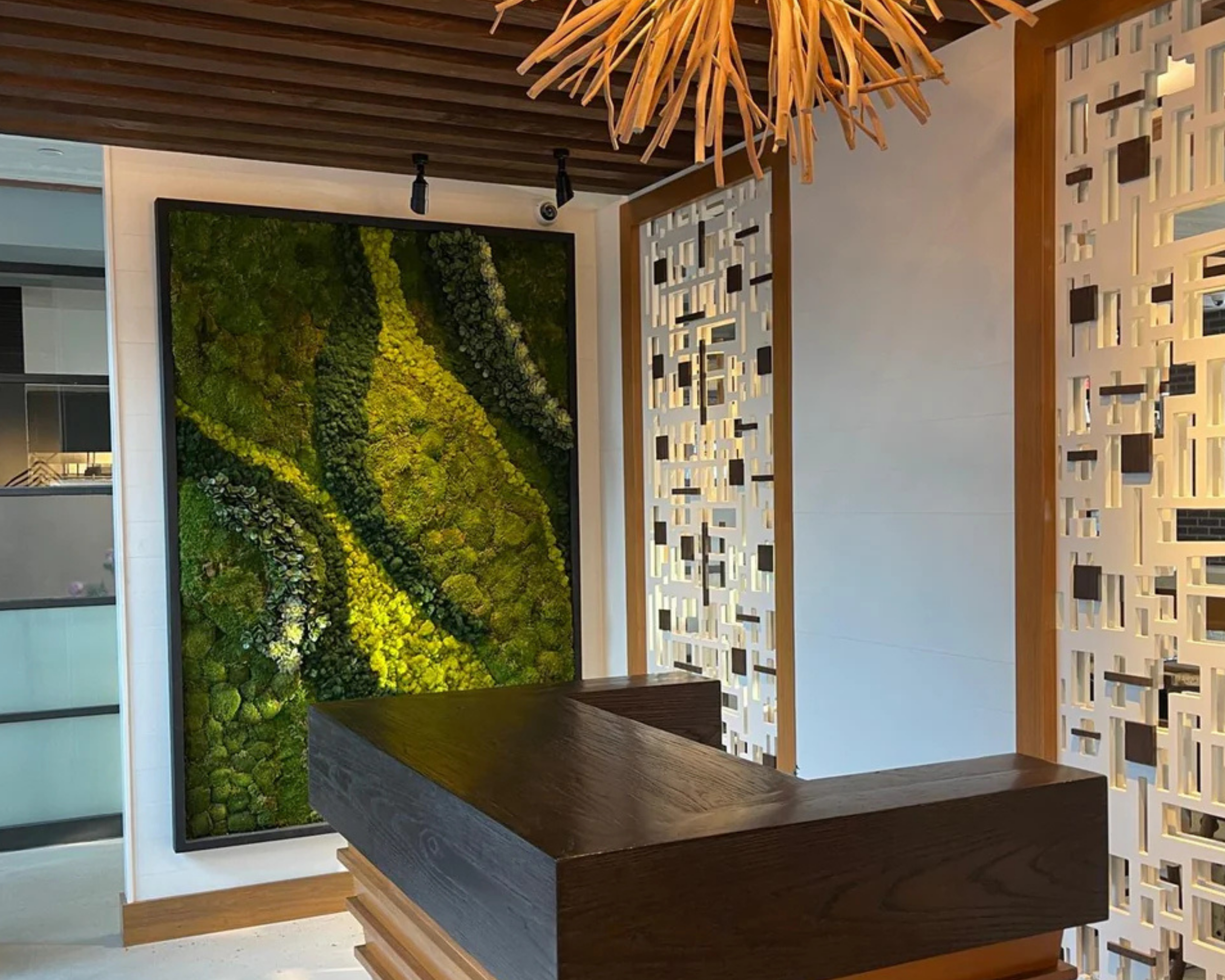
Live wall hangs in reception space.
Plants & Live Walls
First off, the traditional greenery. Like I said before, this isn’t limited to just potted plants. The picture I chose to represent this shows a gorgeous moss wall, strategically placed at the reception area of a space.
Ways to integrate plants:
Live Walls: can include different kinds of plants, flowers, or moss;
Potted Plants: any kind of vegetation in a vase, pot or planter;
Seasonal Variation: incorporating plants based on the season to match the outdoors.
Advantages of plants:
The color green actually is correlated with having a relaxing effect on those around it.
Decrease of stress, fatigue and anxiety from better air quality (as plants reduce carbon dioxide and VOCs in the air) and from exposure to natural surroundings.
Sound absorption is a huge benefit of plants, as they naturally act as an acoustic sound buffer. This means increased focus and less background noise.
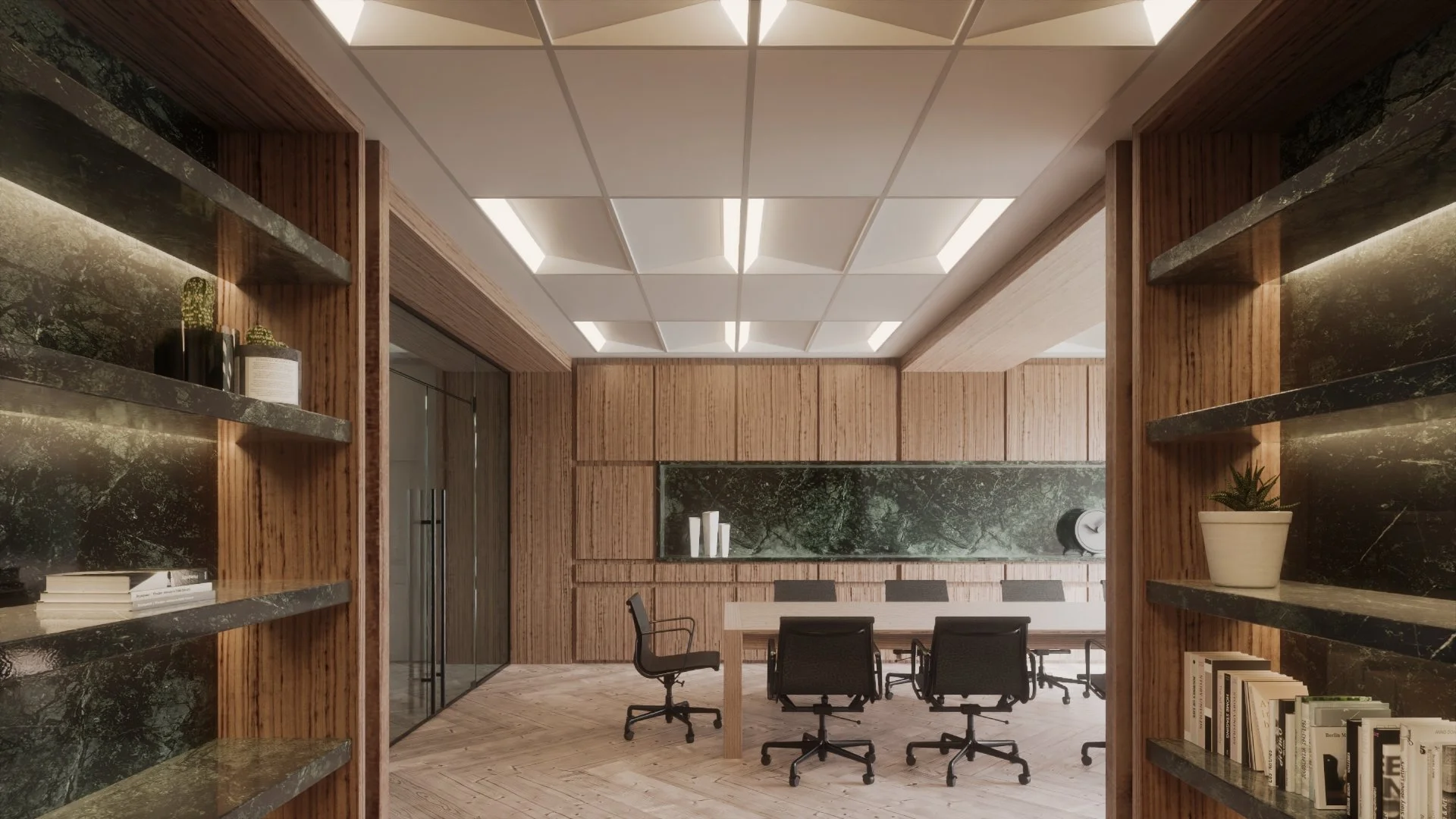
A conference table and chairs sits at the end of a hallway with subtle lights and dark marble shelves surrounding it.
Natural Lighting
Lighting is probably one of the most underrated integrations of nature in our workplaces, and it’s one of the most impactful changes to make. We’re all accustomed to fluorescent lighting — which is why I’m showing a subtle, softer approach in this example.
Ways to integrate lighting:
Circadian Lighting: Reactive lights that mimic the movement and color temperature of the sun. It boosts energy levels at the high points of the day and naturally decreases as the sun sets.
Diffusing Daylight: Maximizing window light to help it filter through the workspace.
Spatial Lighting: Using different shades of light throughout a room.
Advantages of lighting:
Circadian lighting regulates your melatonin and cortisol levels. Proper light exposure during the days means deeper, better sleep at night, which is a huge win for you and your team.
Proper lighting actively battles seasonal depression — something that’s incredibly common in states like Michigan with extended winter months.
Eye strain significantly decreases with appropriate lighting, particularly when light fixtures are more subtle. Your brain spends less intentional time processing light and it frees headspace for focus.
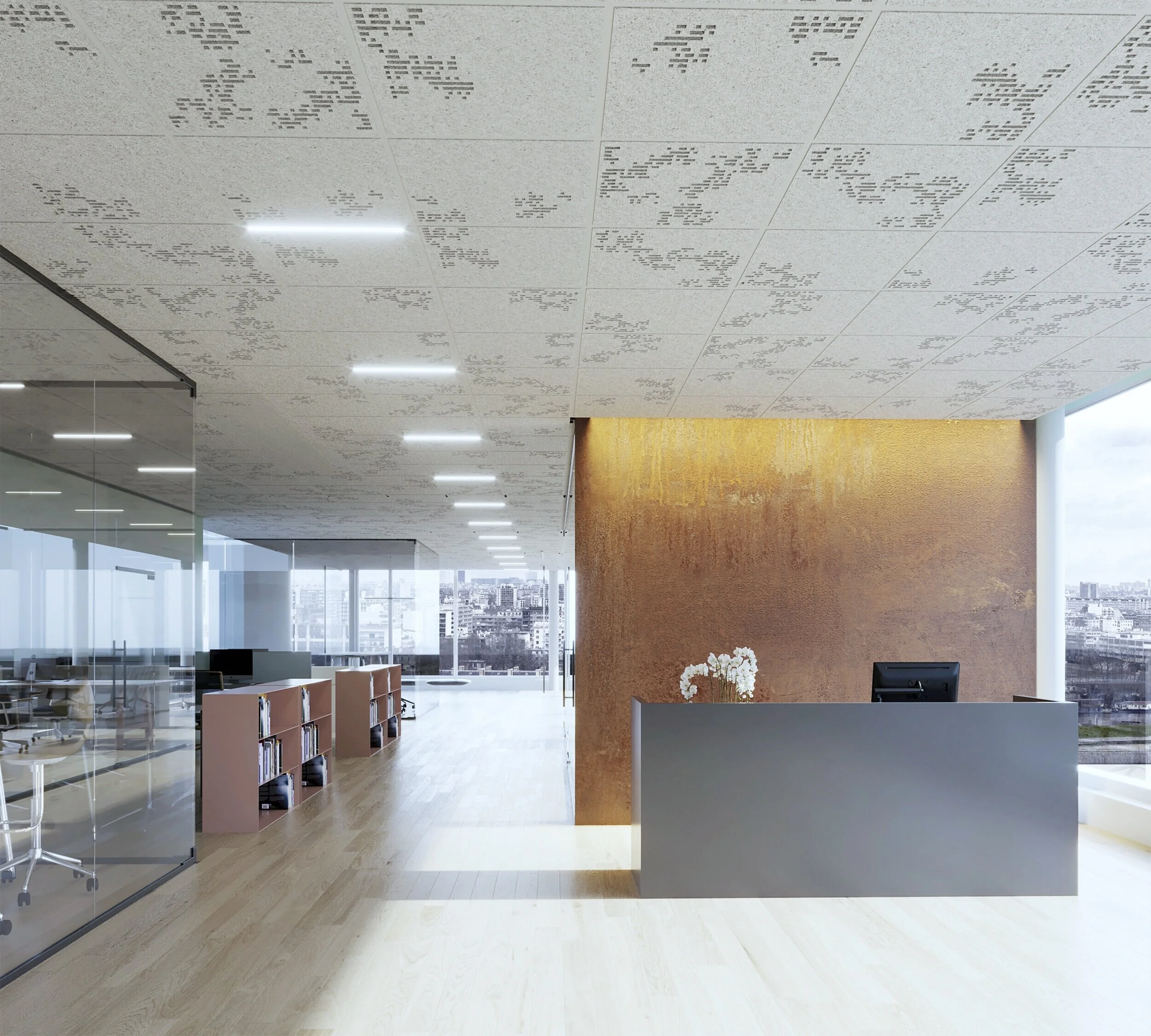
A chic, upscale reception desk sits underneath a ceiling that is filled with aesthetic patterns.
Fractals
Fractals represent elements found in nature by replicating their shapes. They are repetitive patterns, like those commonly found in elements like snowflakes and leaves. This example shows a fractal ceiling meant to imitate clouds.
Ways to integrate fractals:
Statistical Fractals: Using carpets, wallpapers, or acoustic panels with "organized complexity" patterns that the human brain can process easily, reducing stress.
Structural Fractals: Architectural elements like columns, walls or ceilings that mimic patterns or elements of nature — like trees, clouds or waves.
Geometric Repetition: Incorporating tiling or masonry patterns that imply a mathematical order and help to structure visual processing.
Advantages of fractals:
Since our brains are already trained to process these patterns (as opposed to contrived patterns often found in wallpaper or wall-coverings) fractals can decrease physiological stress by 60% (2).
Fractals incorporate nature into the workspace seamlessly, avoiding the stylistic change that can often be correlated with putting too much greenery in a space.
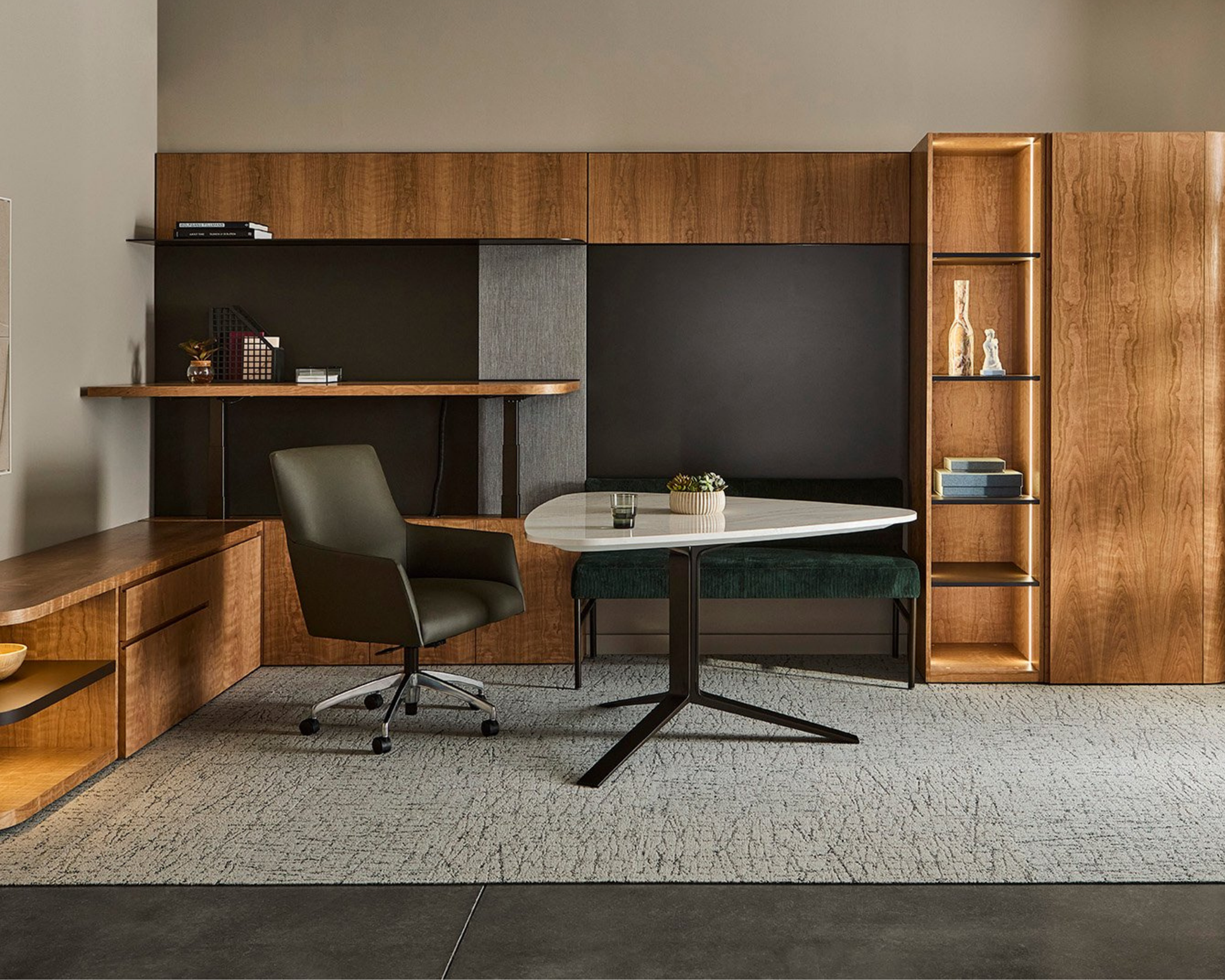
A modern but classic office with a conference chair and wood casegoods.
Organic Materials
Using natural materials in your workspace, whether it’s in furniture like the image I chose, or in floors, walls or accessories, it goes a long way toward grounding the space. The visual and subconscious effect of materials found in nature set the mind at ease and serve for a more sustainable office space.
Ways to integrate organic materials:
Sensory Realness: Using wood with visible grain and knots, or stone with natural veining, to remind the user of the origin of the material.
Patina: Using materials like copper, leather, or wood that age and show change, reflecting the natural cycle of wear and growth.
Tactile Diversity: Mixing textures like rough stone, smooth wood, and woven fibers to engage the sense of touch, which heightens the senses and grounds the user.
Advantages of organic materials:
Just touching natural materials can lower your heart rate and blood pressure.
Since office work is increasingly digital, the connectivity to something permanent and organic (like wood or stone) instills a sense of safety in employees and increases overall contentment.
All of these kinds of biophilia are directly attached to a positive outcome: increased productivity, creativity and employee satisfaction and wellness. Not only that, it actively decreases employee stress and fatigue. If integrated tastefully, biophilia will be a gamechanger for your team. I hope going in depth on these different types of nature has given you a reference for the right biophilic element for your workspace. Together, we’ll work toward beating the eternal Michigan winter and bringing fresh, revived energy into our day-to-day tasks and spaces!
Interested in working with Kim or one of our interior designers on incorporating biophilic elements into your workspace? Whether it’s a project you’re looking to start or just a question about the best application of nature for your space, our design team will always take your call or email and be there for you.
Reach out for renewed productivity here: info@yti.llc | (866) 996-8952

Kim poses in a headshot with design samples in hand.
Article Sources:
https://www.theguardian.com/money/2014/aug/31/plants-offices-workers-productive-minimalist-employees
2. https://www.optimistdaily.com/2022/03/fractals-why-your-brain-prefers-nature-over-cities/#:~:text=The%20University%20of%20Oregon%20study,in%20stress%20and%20mental%20fatigue.