
4 Ways Your Healthcare Space Makes Wellness an Experience
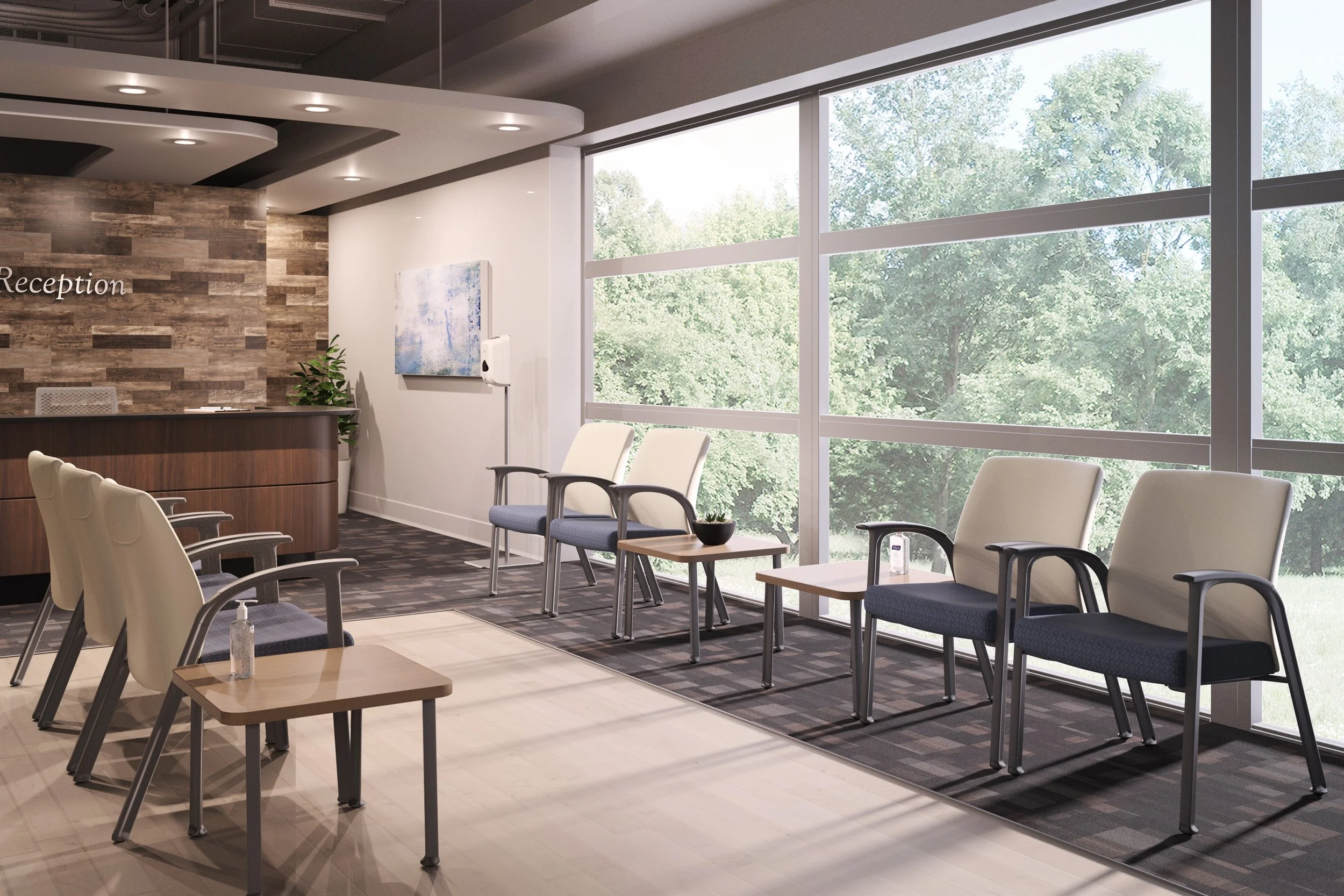
A clean, well-ordered healthcare lobby with waiting room furniture and a reception desk.
1. It Should Feel Clean
The last thing you want is to feed the fear that time in the waiting room will just give you some other bug! That's why in healthcare, you know that cleanliness is at the heart of how you take care of your patients.
The materials, surfaces and furnishings selected for a healthcare environment need to stand up to frequent cleaning and the demands of daily use. But there's another side to it, too: people notice when a space feels clean and cared for.
Thoughtful material selection can help make maintaining that environment easier while creating a space that feels welcoming rather than clinical.
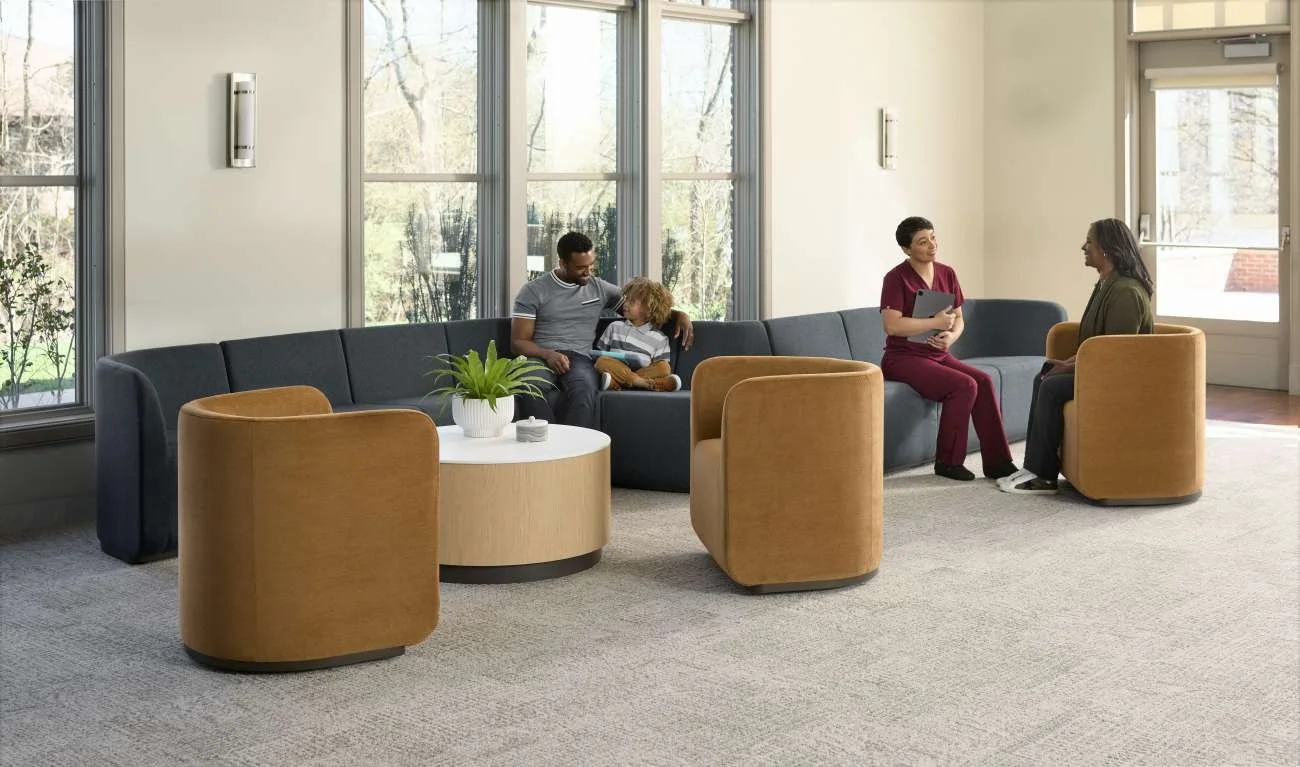
A calm healthcare lobby with a long lounge sofa and chairs hosts a father and son talking and a nurse meeting with a middle-aged female patient.
2. It Should Feel Calm
Healthcare can be stressful before anyone says a word.
Noise, visual clutter, uncomfortable furniture and a lack of privacy can all make an already difficult experience feel more difficult.
A well-designed space considers the sensory experience, too. Acoustics, lighting, comfortable seating, privacy and even access to natural elements can help create an environment that feels more calm and intentional.
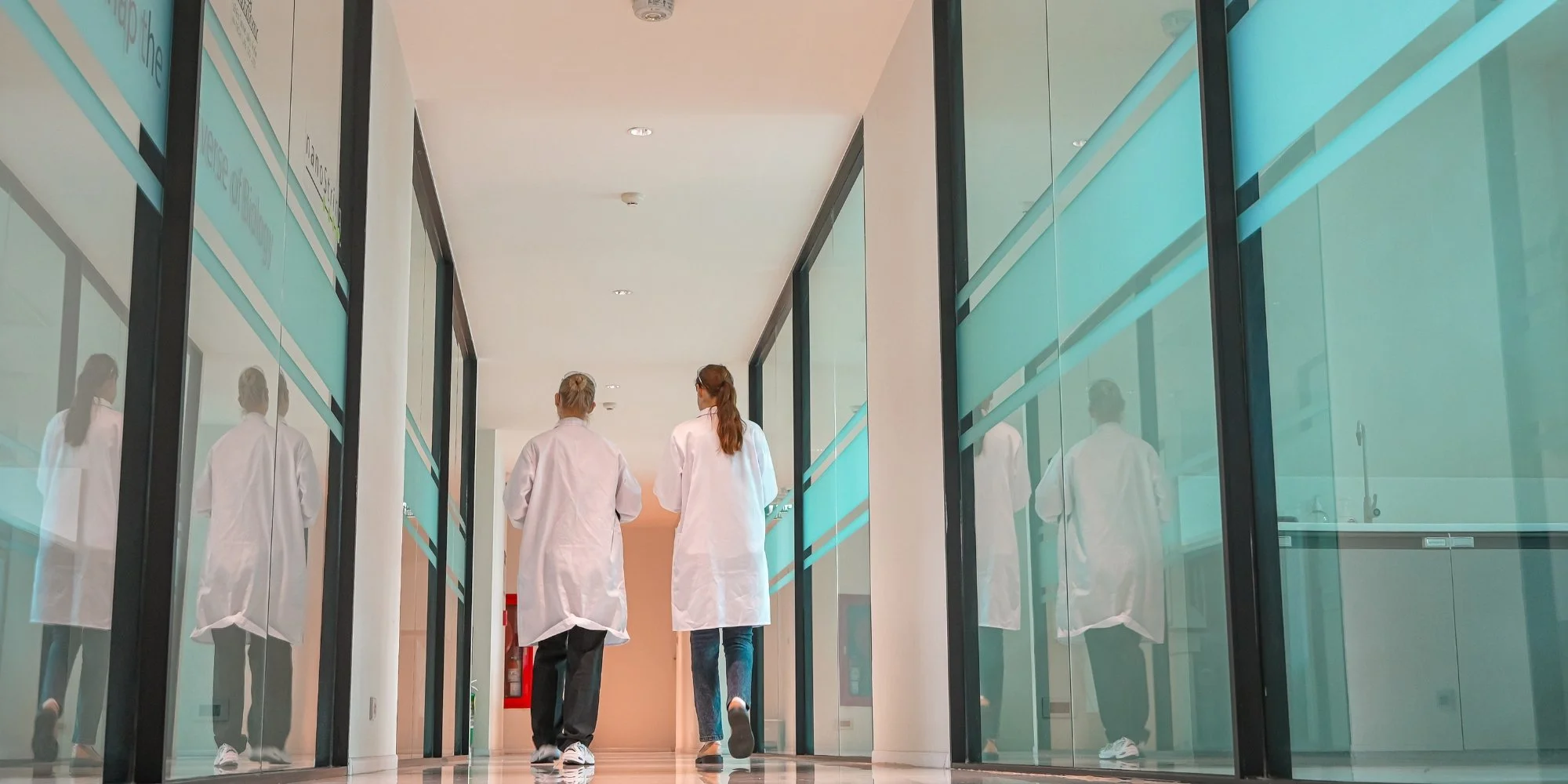
Two female doctors walk down a hallway lined with glass walls to patient rooms.
3. It Should Make Sense
Have you ever walked into a medical building and immediately wondered, "Where am I supposed to go?"
Wayfinding matters.
Clear circulation, intuitive layouts, visible signage and thoughtful placement of spaces can make it easier for patients, families and staff to get where they need to go.
Good design doesn't just look organized. It helps people understand the space without having to think too hard about it.

A doctor talks with an elderly patient while a young female nurse speaks to a father and his toddler son in the background of a well-lit waiting room.
4. It Should Work for Everyone
A healthcare environment has a lot of people to serve.
Patients need comfort and privacy. Families need places to wait and gather. Staff need spaces that support their workflow. Administrators need the environment to function efficiently day after day.
That means the best healthcare spaces aren't designed around one person or one moment. They're designed around the many ways the space will actually be used.
Because at the end of the day, a successful healthcare space is more than simply attractive. It helps people feel cared for, helps staff do their jobs, and helps the entire environment work better.
Planning a Healthcare Space?
Whether you're starting from an empty space, renovating an existing environment or trying to solve one frustrating problem, start with the way the space needs to work.
That's where good design begins.
Let's talk about your space.